
The Never-Ending Wave of Lending Law Changes: How to Stay Afloat
If it feels like the lending compliance landscape changes every week, you’re not imagining it. Federal regulators are pushing out new rules, state agencies are updating licensing laws, and “minor” threshold adjustments are quietly taking effect in ways that can have significant operational impact.
For compliance teams and legal departments, the challenge isn’t just knowing that the rules changed; it’s figuring out which changes matter, when they apply, and how to keep everything in sync.
At Winnow, we’ve been closely tracking the latest shifts in lending regulations, and it’s safe to say that these past few months have been busy.
Why So Many Changes All at Once?
A few key forces are driving the current surge:
Regulators are responding to new technologies and risks. With AI, digital underwriting, and fintech partnerships reshaping the lending process, both federal and state agencies are racing to ensure the rules keep pace.
States are getting more active. Many state regulators aren’t waiting for federal direction; they’re rewriting their own lending, disclosure, and licensing rules to tighten consumer protections and close gaps.
The details are moving targets. Even “routine” updates, such as inflation adjustments to loan thresholds, can affect which transactions are covered by certain laws, meaning yesterday’s compliance settings might not match today’s requirements.

A Few Recent Examples Worth Noting
Here’s a snapshot of some recent changes that should be on every lender’s radar this fall:
Massachusetts lending law overhaul: Massachusetts finalized significant updates to its small-loan and mortgage licensing regulations, modernizing disclosure standards and revising lending limits. Any institution that lends or services in the state will need to review its compliance policies and licensing workflows to ensure they align with the new framework.
Updated lending thresholds under Regulation Z: Starting January 1, 2025, the federal exemption threshold for certain consumer credit transactions under the Truth in Lending Act (Reg Z) will increase to $71,900. That means loans that were previously exempt could now fall within TILA coverage — impacting disclosure obligations and system configurations.
Expanding fair-lending scrutiny: While the CFPB and other federal agencies continue to focus on fair-lending enforcement, several states are launching their own initiatives. These range from more aggressive examination schedules to enhanced data-reporting requirements. Lenders operating across multiple states should expect closer oversight and prepare for differences in how each regulator interprets “fair lending.”
Ongoing mortgage compliance updates: Mortgage lending remains a highly active area, encompassing cybersecurity expectations, vendor oversight, and revised servicing requirements. Keeping track of these moving pieces is especially challenging for lenders that rely on multiple third-party systems or partners.
The Real-World Impact on Lenders
For compliance and legal teams, the sheer volume of updates can feel overwhelming. But the cost of falling behind is steep.
Missed updates = regulatory risk. Failing to adjust systems or disclosures to a new rule can quickly result in a finding during an exam or audit.
Outdated processes = operational drag. Compliance gaps often lead to manual workarounds, reprocessing, and inefficiency.
Inconsistent information = reputational damage. Customers and investors expect accuracy — even small discrepancies can raise red flags.
In short, staying current isn’t just a compliance exercise; it’s a core business function.
What Lenders Can Do Now
Here are a few practical steps to stay ahead:
Centralize your regulatory tracking. Whether it’s a dedicated internal resource or a compliance partner, someone should be monitoring and summarizing changes regularly.
Update compliance calendars. Map effective dates for both state and federal changes so implementation doesn’t fall through the cracks.
Review your licensing footprint. If your organization operates in multiple states, confirm each license aligns with the latest state-specific amendments.
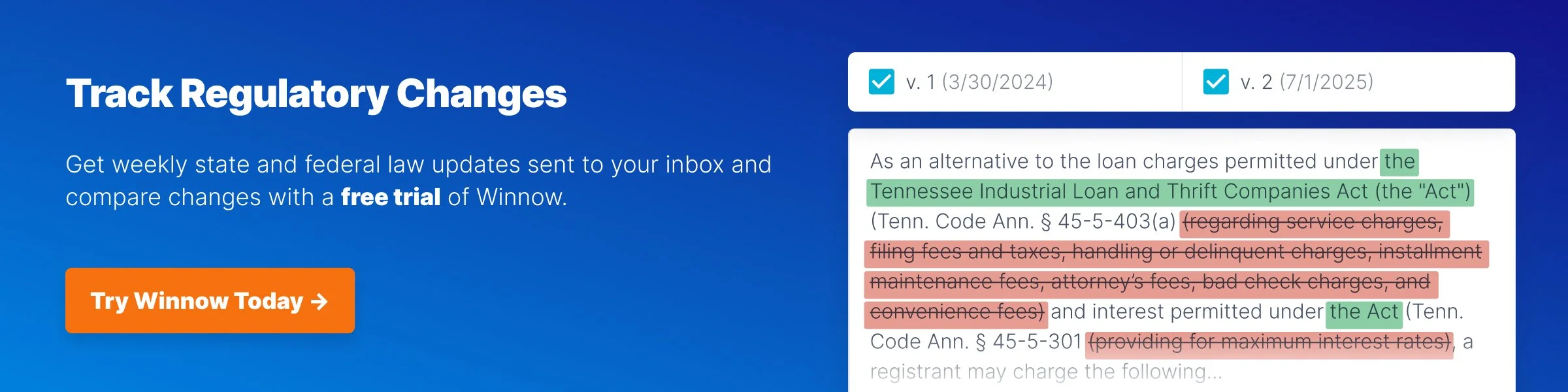
Automate where possible. Manual research and spreadsheets can’t keep pace with the rate of change. Automation tools and platforms (such as Winnow) can significantly reduce workload.
Educate your teams. Even the best policies fail if your staff doesn’t know what changed or why it matters. Brief updates and ongoing training go a long way.
How Winnow Helps Teams Keep Up
At Winnow, we help lenders, servicers, fintechs, and law firms manage the complexity of constant regulatory change. Our team monitors both federal and state lending laws, flags key developments, and helps you translate legal updates into operational action.
From customized regulatory summaries to rule-by-rule implementation guidance, we make sure your organization stays compliant, efficient, and ready for what’s next.
If you’d like to learn more about how we can support your compliance program, reach out to schedule a quick consultation or explore how our Winnow platform can simplify your ongoing monitoring.

Staying Current Is a Competitive Advantage
In a world where lending rules shift monthly, or sometimes weekly, staying current isn’t just about avoiding penalties. It’s about operating with confidence, making informed decisions, and protecting your customers.
The lenders who adapt quickly will be best positioned to thrive. And Winnow is here to help you stay a step ahead.
👉 See how Winnow can supercharge your compliance workflow. Request a demo today