
Preparing for Compliance Audit Season: A Strategic Guide for Financial Institutions
For banks, credit unions, mortgage lenders, and fintechs, the period between January and March (often extending into April) is one of the most demanding times of the year for compliance, legal, and risk teams.
This guide explains how financial institutions can proactively prepare for upcoming compliance audits, reduce regulatory risk, and streamline audit response with less disruption to daily operations.
TL;DR: Compliance Audit Readiness Checklist for Financial Institutions
Financial institutions entering audit season should know:
Compliance audit season (Jan-Mar/Apr) increases examiner scrutiny and documentation demands
Fragmented regulatory research and manual tracking create major audit exposure
Centralized regulatory intelligence reduces audit risk and operational disruption
Cross-functional alignment strengthens consistency across compliance, legal, and risk
Technology-enabled compliance programs help institutions respond faster and more confidently
Compliance Audit Season Is Becoming More Challenging Each Year
During the first quarter of the year, financial institutions often face recurring audit challenges:
Scrambling to Validate Regulatory Interpretations
Auditors frequently ask:
When was this law interpreted?
Who approved the interpretation?
How was it applied operationally?
Without centralized legal research and version control, teams waste time reconstructing decisions after the fact.
Inconsistent State-by-State Compliance Documentation
Multi-state lenders face increased exposure when state lending requirements are tracked manually or inconsistently across:
Products
Teams
Business units
Internal systems
Reactive Audit Response
When compliance teams operate reactively, audits become disruptive fire drills that pull senior leaders away from strategic priorities and increase the likelihood of examiner findings.
Examiner Expectations for Speed and Precision
Regulators increasingly expect near-immediate access to accurate, up-to-date compliance evidence, especially around:
Consumer lending
Licensing
Servicing
Disclosures
State law requirements

Best Practices for Preparing Ahead of Audit Season
Centralize Regulatory Research and Compliance Intelligence
Audit preparation starts long before the first examiner's request. Leading institutions ensure:
State and federal lending laws are centralized in one system
Regulatory updates are tracked continuously, not quarterly
Legal interpretations are documented and defensible
A centralized compliance intelligence platform reduces ambiguity and strengthens audit confidence.
Build an Audit-Ready Regulatory Record
Auditors want to understand how decisions were made, not just the outcome. Institutions should maintain:
Clear regulatory change histories
Documentation of implementation steps
Evidence of review and approval workflows
This transparency reduces follow-up requests and audit friction.
Reduce Manual Compliance Work Before Audits Begin
Manual monitoring consumes valuable time, especially during audit season. Forward-looking teams automate:
Regulatory tracking across jurisdictions
Lending law research and compliance mapping
Impact assessments tied to new regulations
Automation allows teams to focus on risk management rather than information gathering.
Align Compliance, Legal, and Risk Teams Early
Misalignment across departments often surfaces during audits. Pre-audit alignment reviews ensure:
Shared understanding of obligations
Consistent interpretations across teams
Unified audit narratives supported by documentation
Audit Season Readiness Checklist
Use this checklist to assess preparedness before examiners arrive:
Centralized state + federal regulatory library in place
Regulatory change tracking is active and current
Legal interpretations documented with version control
Audit-ready evidence available within minutes (not days)
State-by-state compliance requirements are consistently applied
Compliance, legal, and risk teams aligned on audit narratives
Examiner requests workflows defined in advance
Leverage Compliance Technology to Prepare for Audit Season
Winnow was built specifically for compliance, legal, and risk teams operating in highly regulated financial environments.
With Winnow, institutions can:
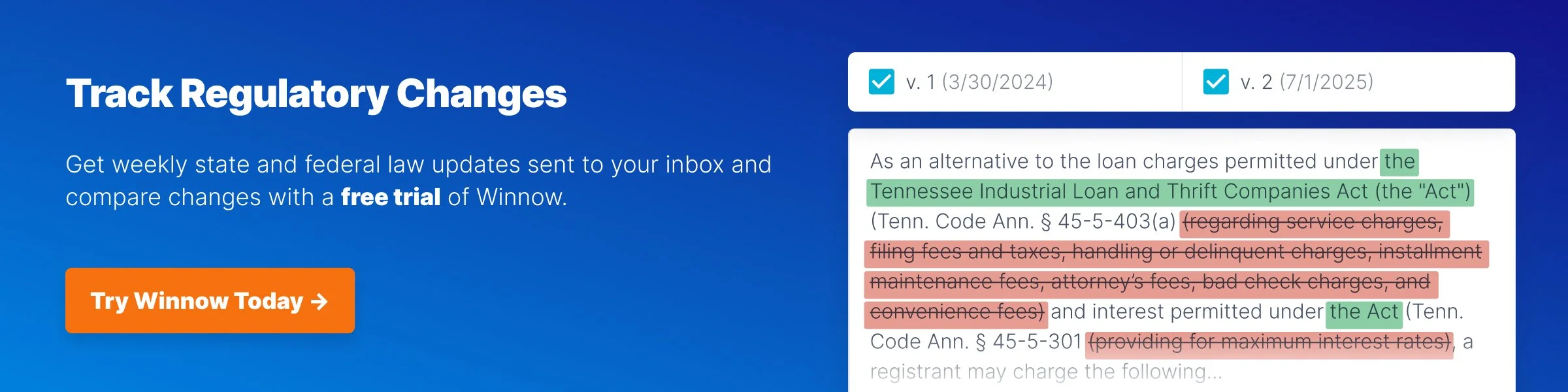
Continuously monitor state and federal regulatory changes
Centralize compliance research in one platform
Reduce compliance workload while improving accuracy
Respond to auditors with speed, confidence, and consistency
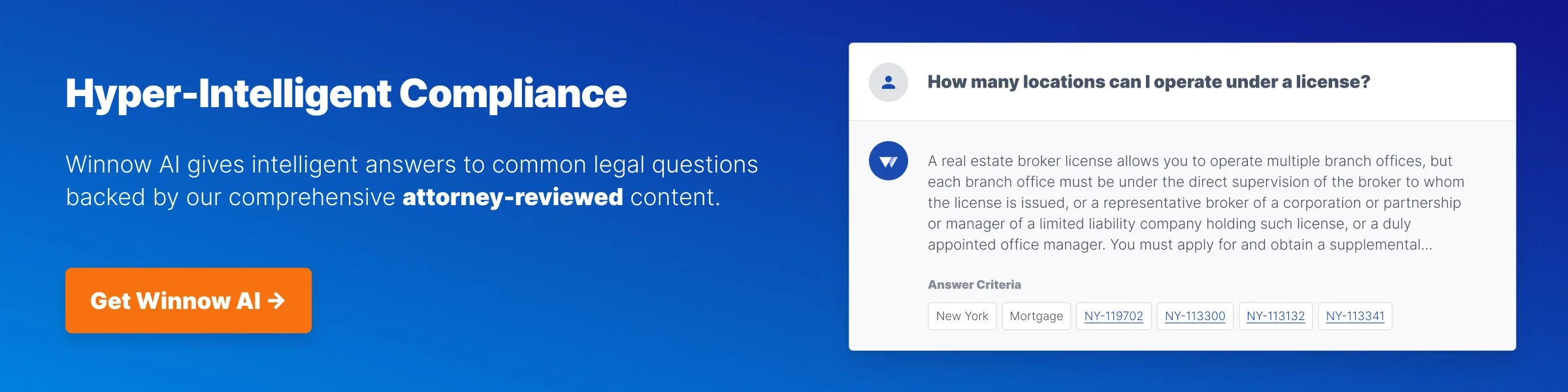
Utilize Winnow AI to quickly answer legal questions
Instead of scrambling during audit season, Winnow enables teams to maintain a constant state of audit readiness.
Turn Audit Season Into a Strategic Advantage
Audit season doesn’t have to be a fire drill. Financial institutions that invest in proactive compliance infrastructure achieve:
Fewer audit findings
Faster examiner response times
Stronger regulatory relationships
Reduced legal and operational risk
The goal is not simply to pass audits; it is to demonstrate a mature, scalable compliance program.
In Conclusion:
Set the Tone for the Year Ahead
As the year advances, now is the time to evaluate whether your compliance processes are built for today’s regulatory demands.
Winnow helps financial and legal professionals monitor regulatory changes in real time, centralize legal research, and reduce compliance workload, allowing teams to enter audit season confident and prepared.
👉 Compliance Tracking You Can Count On. Try Winnow for Free »